Life in the North-Eastern Hospital for Children
SISTER gave me this hegg—it's a whole one. I ain't never had a whole hegg before.
And the chubby urchin, relapsing into silence, solemnly proceeded to peel the unwonted delicacy.
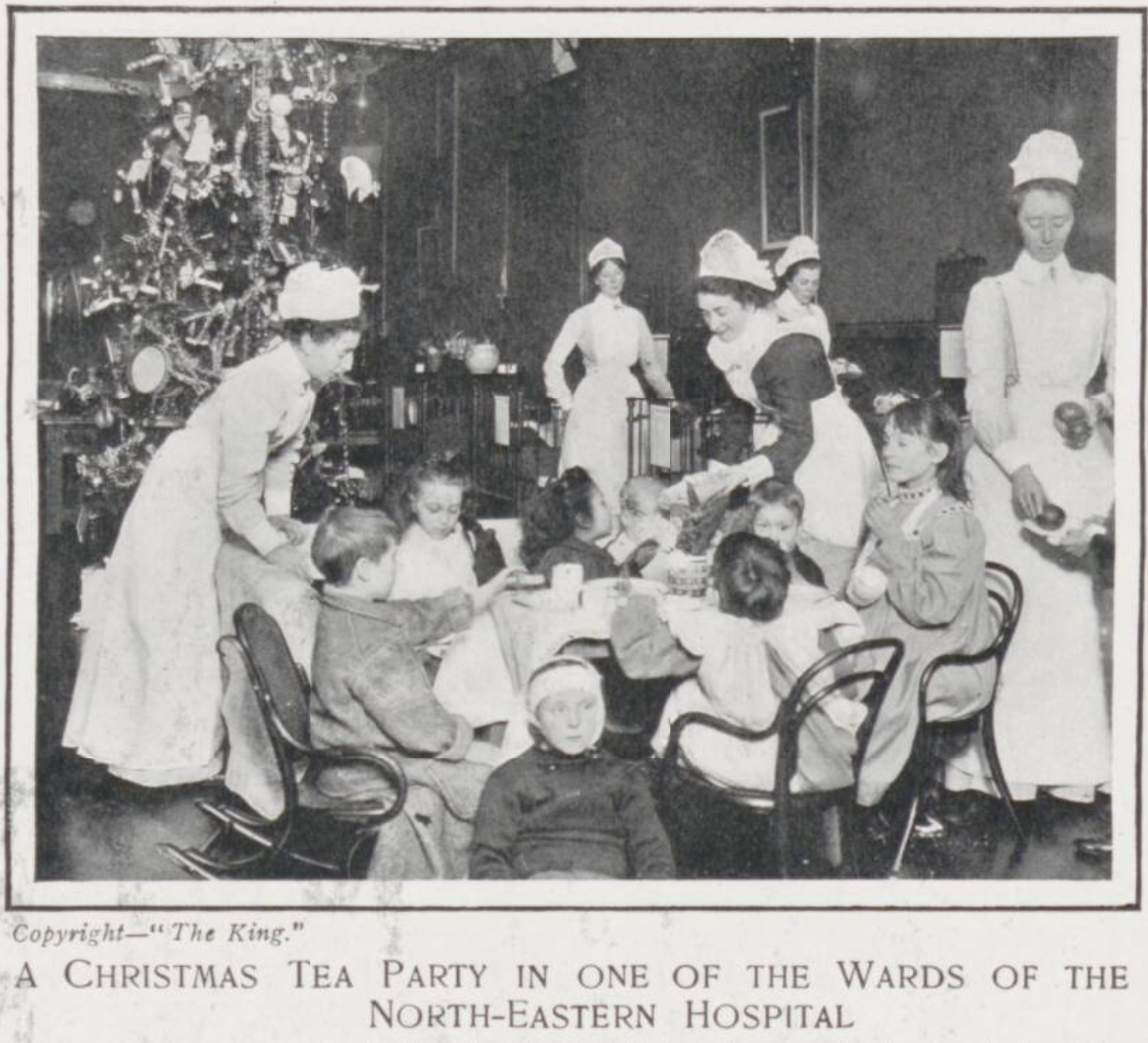
The scene was tea-time at the North-Eastern Hospital in the Hackney Road, a scene that may be witnessed every afternoon the whole year through, and the convalescent children were grouped round a little table in the ward. Tea-parties are a great institution at this hospital, and indeed, there is a special tea-set kept for “birthday teas.” One small patient, whose birthday was thus celebrated, became so intoxicated with delight that he clamoured for “a birfday every day!” It is, indeed, a pleasure to watch the “whole eggs” and bread and butter disappear, just as it does one’s heart good to see the play of spoon and fork at the convalescents’ dinner. To many poor wee folk hospital life is a gala time, when, after weeks or months of suffering, they are able to sit up in bed or run about the wards, and enjoy good food, which has till then been an unknown luxury.
We hear of marvellous feats of appetites at Christmas time. One sturdy youth (who had so completely recovered that his one fear had been that he might be well enough to leave before Christmas) was said to have managed three serves of plum pudding!
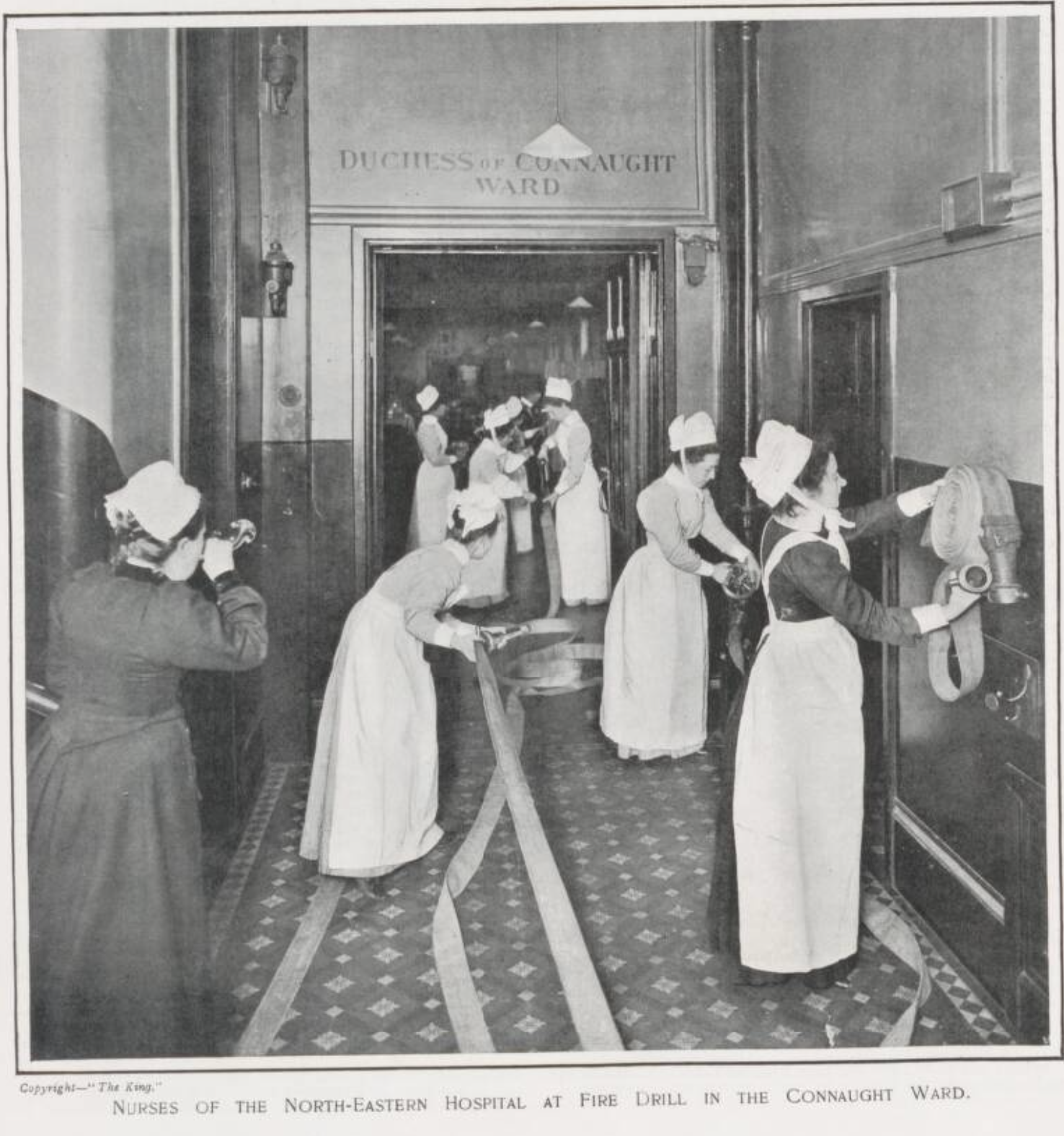
What a picture of comfort are these two wards - Barclay and Connaught - which so far constitute the hospital that ministers to the sick little ones of half-a-million souls - the children of Shoreditch, Hackney, Bethnal Green, and many outlying districts. For all these little sufferers, drawn from the network of streets and alleys, from crowded courts, or rows of small houses, with a genteel "front" and a "backyard" of washing and poverty, there are but fifty-seven cots at present. Small wonder then that generous hands are helping to raise the new buildings which are being built in the Hackney Road, and which will be completed by May or June. Small wonder that the hospital authorities are anxious to enlist the public sympathy and the public pocket for the £30,000 still required for these additional fifty beds, operating theatre, accident room, etc. The North-Eastern Hospital has in the past years been remarkably free from debt, a fact which has perhaps withheld it from public notice. Moreover, a speaking testimony to its efficiency is the fact that the poor of the neighbourhood - and that they are of the poor poorest; a journey to Hackney soon proves - have so far contributed nearly £1,000 a year in small sums towards the maintenance of the hospital. But so many little sufferers have had to be refused admission for the pitiful reason "no room" that the hospital has made a bold move, and the handsome new buildings are the result.
In the past, powerful patrons (from Queen Alexandra downwards) and devoted friends have been attached to the hospital, so it is hoped that with their co-operation and that of new supporters, the work, begun in 1867 by two Quaker ladies in one small dwelling-house, will prosper as it has heretofore. Among the supporters of the new buildings are the child-readers of Little Folks, who have already collected in two years over £1,200 for the foundation of a Little Folks’ ward. Certain it is, that a children’s hospital appeals to young and old alike. To return to Barclay and Connaught wards’ in the old buildings, where we left the tea-party. All is light and warmth and bright colour—scarlet of small red dressing gowns and quilts — sparkle of firelight and flower-laden tables. At the first glance one is apt to forget the tragedy which works beneath the brightness, but a tour of the cots soon brings the grim realitie to lights.
Children labouring under painful skin-diseases, children whose bandages conceal frightful burns, the result of "mother going out to work" and a unguarded fire, babies - mere skeletons, terrible to gaze upon, wasting away in spite of all loving care and skill - blind little ones, lame little ones, pinched little Jewish children, sons and daughters of the "Chosen People" - aliens in a far country - children who speak a foreign tongue and whom the patient nurses can only reach through the universal tongue of loving-kindness.
The stories that fall from the lips of the nurses are a plain unvarnished tale of child-life in a great city, and as such go home with more power than any printed appeal. This is the grievous side of ward life, but there is a very bright side, too. There are so many rosy little faces in the cots, so many bright eyes, so many little tongues that wag merrily in answer to a visitor’'s questions, so many who find the hospital the very pleasantest spot in the world, and who soon forget the bad hours of pain when they are “getting well.” You will hardly ever visit the North-Eastern Hospital without hearing some sound of singing from a cot. It may be a small boy lustily chanting the hymn which resounded last Sunday in the ward, or a secular melody — Dolly Gray, by preference, or a small girl crooning over her needlework. There are dolls' houses to play with, a rocking horse to ride, books to read, and dolls to cuddle. Then there are high days and holidays too.
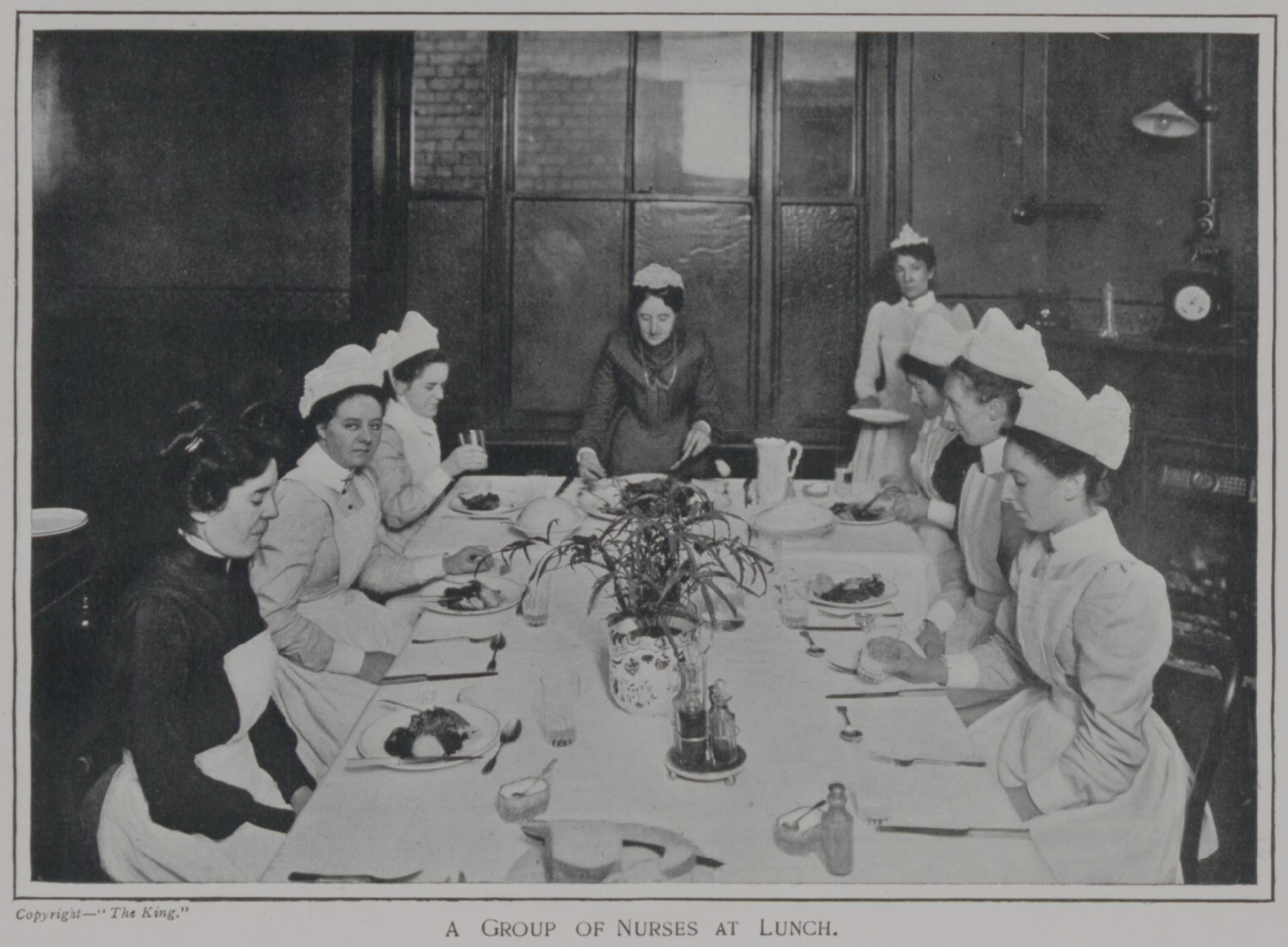
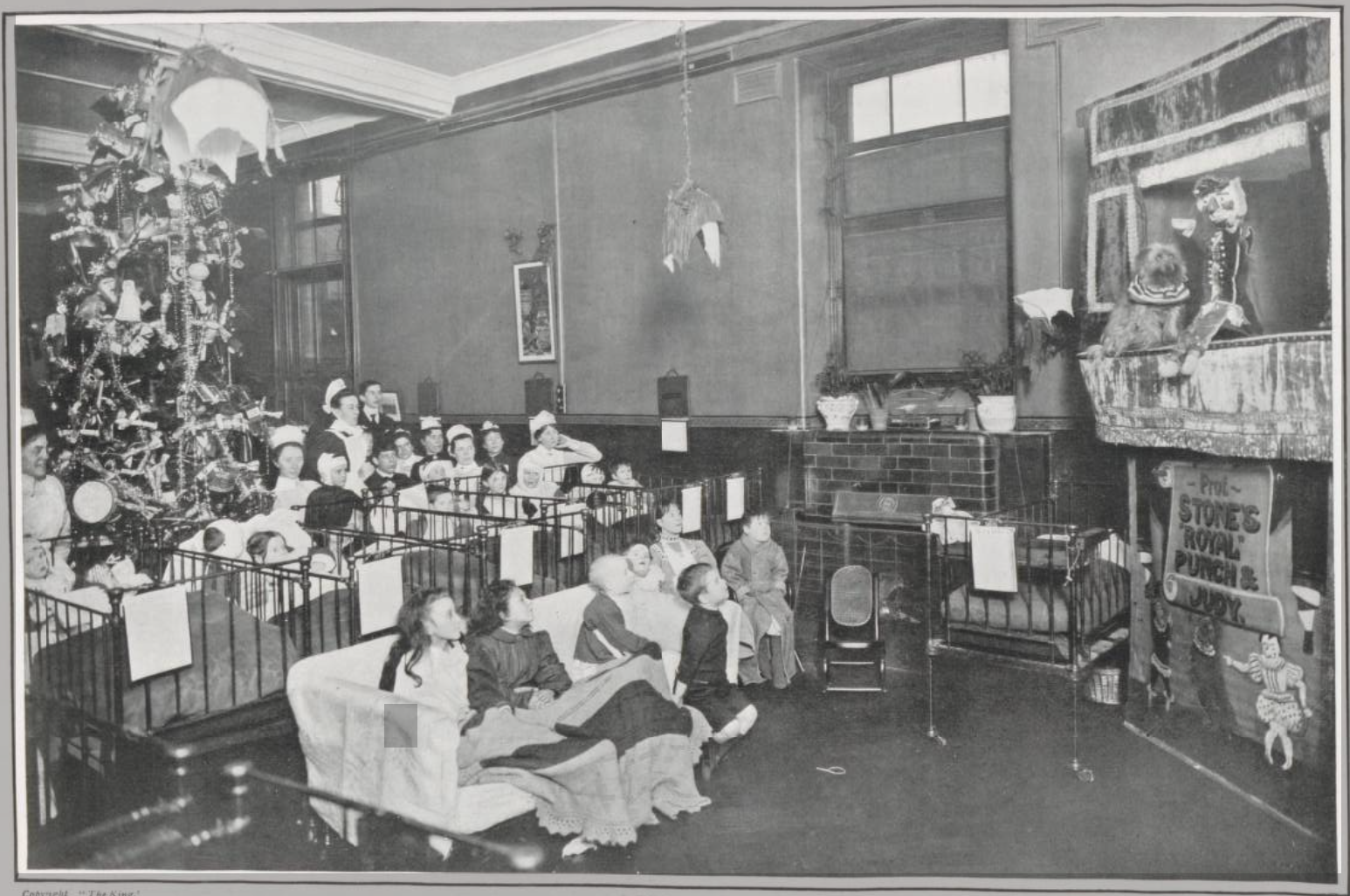
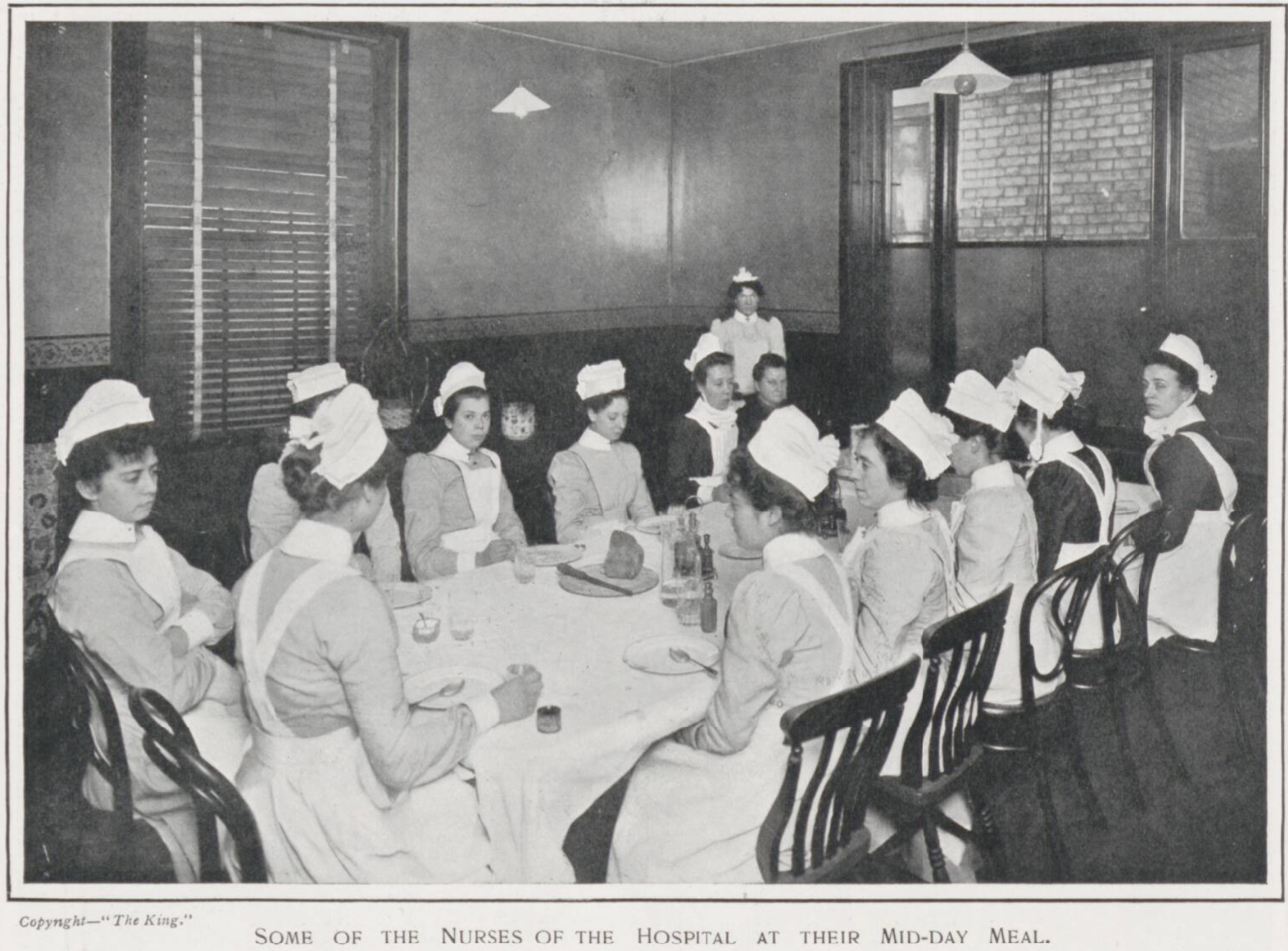
Life in the hospital is arduous for those who keep the machinery going. From early morn to evening they perform their labour of love, living in a little world of other people’s children, bearing with their fretfulness, their diseases, their moods and temperaments. And in the festivals for the children they throw themselves heart and soul, and find recreation too. There is Christmas-time, when presents, Punch and Judy, and Christmas-trees form a waking dream of delight to the little ones. It is well worth seeing the rapture on every face, from the 'well' patients seated in the stalls —i.e., 'sofa stalls' — to the small babies in the cots. The evergreen and distinctly immoral story of Punch finds great favour in the wards. Another institution sacred to the North-Eastern Hospital is the tea given by the matron and nurses to all the fathers and mothers of the patients soon after Christmas Day. This is a function which is always highly successful and immensely appreciated. It would hardly be imagined that the Boat Race would awaken much enthusiasm in a hospital situated so far from the scene of that classic event, in which the general interest is said to be flagging. But, as a matter of fact, the children of the North-Eastern Hospital are feverishly excited over it.
Party feeling runs exceedingly high, and light blue and dark blue badges have to be religiously affixed to the crimson dressing-gowns. Then as the year advances and the days grow warmer, the flowering plants on the roof playground are set out, the awning is set up, and the convalescents take their toys and their games into the open air. Sunlight and breezes find their way over the crowded housetops, and the geraniums and heliotropes bloom in a neighbourhood, where even now in many a back alley you may find a stunted mulberry tree, belonging to the days of the foreign weavers.
So the days pass quickly for patients and nurses alike; a round of meals and doctors’ visits, and ceaseless watching and tending, with perhaps a fire-drill, or visits of parents or friends, while the tide of life in the outside world flows up to the very walls of this haven of rest.
Hundreds of children come and go. In 1901 the fifty-seven beds were tenanted by 732 children — some restored to health and endowed with strength for the battle before them, others condemned to years of sickness and weakness, others saved from that fate by the merciful hand of death.
Meanwhile the stream of out-patients, so ragged and down at heel for the most part, flows for ever into the grey hospital portals. Often the out-patients’ room is so crowded, and it holds 200, that the poor mothers, carrying their heavy babies, can find 'standing room only.' Armed with their bottles of medicine the careworn mothers and fathers and sisters troop out into the cold streets, back to the one or two miserable rooms, where sick and well herd together.
Far more fortunate, though otten more ailing, are those favoured fifty-seven who have won a way, by the sad privilege of pain, to a little cot and a little red dressing gown in the North-Eastern Hospital for Children.
Images of the wards in 1903